Defining Neurodiversity Affirming Space
Would you like to come and meet neurodivergent researchers and learn about their project ‘Defining Neurodiversity Affirming Space’?
29th July 2026 at 10 – 11am (approximately)
Free to attend
This is a ‘camera on’ event
Exclusively for neurodivergent young people age 12-18 (family members are welcome to attend alongside though)
Have you ever wondered what it’s like to be a researcher?
Or wished you could ask questions about autism and neurodiversity research directly to the people doing it?
Join us online for a relaxed session where three neurodivergent researchers will share what they’ve been exploring about neurodiversity-affirming spaces – places where neurodivergent people feel safe, understood and able to be themselves (what we strive for at GROVE!).
They’ll be sharing a zine, some poetry, and other creative work from the project and then you can ask questions via the chat or on the mic’.
You could ask things like:
- What made you want to do this research?
- Why did you use art, poetry and collage?
- What surprised you most?
- What makes somewhere feel truly neurodiversity-affirming?
- What’s it like being a neurodivergent researcher?
- How do you become a researcher?
- Can young people do research too?
- Or ask anything else you’re curious about!
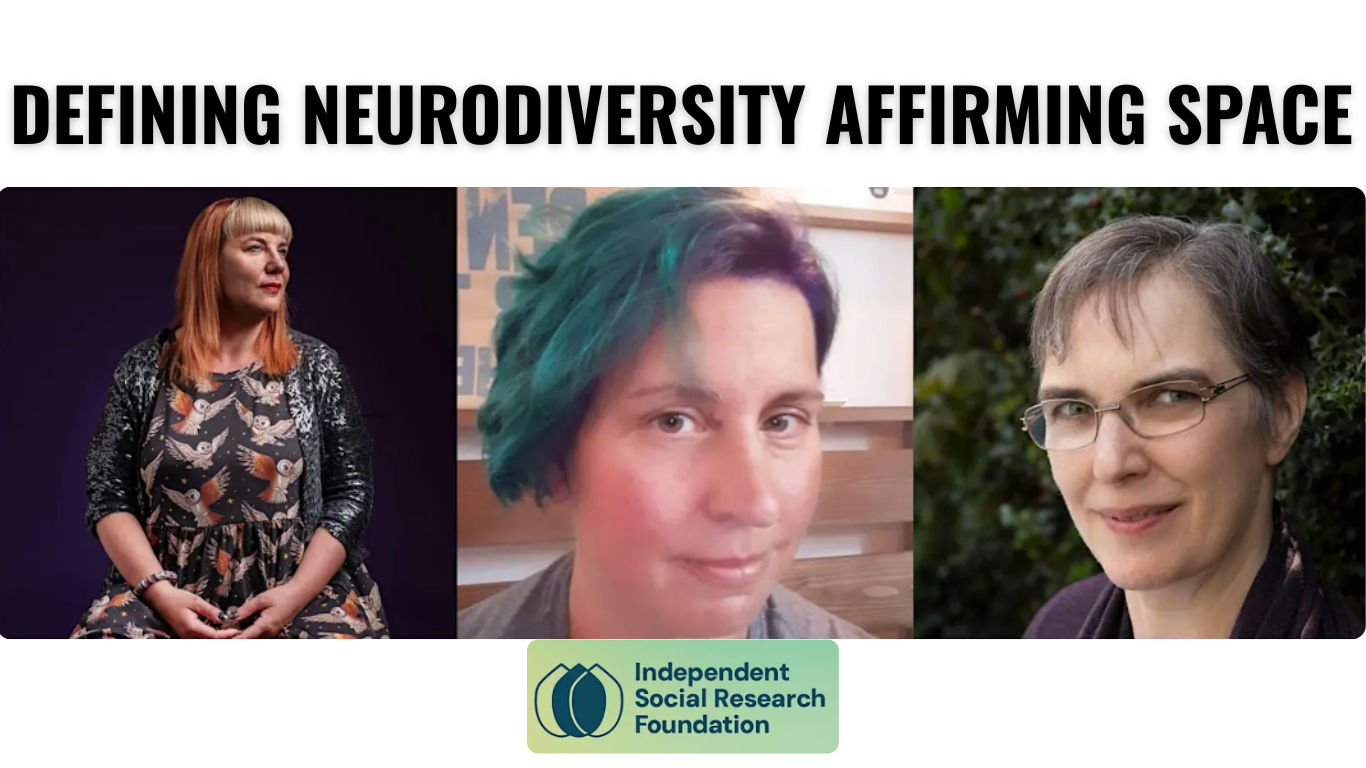
The research was carried out by Dr Kate Fox, Dr Helen Kara and George Watts, who are all neurodivergent researchers. They explored neurodiversity-affirming spaces using creative methods including collage, poetry, drawing and photography to help people share their experiences in different ways. This work is funded by the Independent Social Research Foundation.
Whether you’re interested in research, creativity, neurodiversity, or you just enjoy asking interesting questions, we’d love to see you there.
Who the researchers are:
Dr Kate Fox is a stand-up poet, spoken word artist and broadcaster. She is a regular contributor to Radio 4’s spoken word cabaret “The Verb”, has made two comedy series for Radio 4, was a judge for the 2023 Forward Prizes for poetry, been Poet in Residence for the Glastonbury Festival and the Great North Run and completed a PhD in stand-up comedy.She is the author of “Where There’s Muck There’s Bras: True Stories of the North of England’s Women” published by Harper North, and poetry collections including “On Sycamore Gap” (Harper North, 2024), “Bigger On the Inside” (Smokestack Books, 2024) and “The Oscillations” (Nine Arches Press, 2021). She is also a neurodivergent advocate whose latest show “Bigger on the Inside” explores neurodiversity through the lens of Doctor Who.
George Watts is a PhD Researcher at Durham University and one of GROVE’s Mentors. They are currently undertaking an SGSSS funded PhD Studentship in collaboration with Scottish Autism on ‘Understanding experiences of the autistic community for all autistic adults’ – looking at how the autistic community may benefit all autistic people (including those with learning disabilities) and exploring barriers to inclusion in the community.
Dr Helen Kara is an independent researcher, author, teacher and speaker specialising in research methods, particularly creative methods, and research ethics. With over 23 years’ experience as an independent researcher Dr Helen Kara now teaches doctoral students and staff at higher education institutions worldwide and is a prolific academic author with over 25 titles; notably Creative Research Methods: A Practical Guide and Research and Evaluation for Busy Students and Practitioners, both in their second editions.
Keeping Our Space Safe – Camera On Event
To help keep everyone safe, all young people will need to turn their camera on at the beginning of the event so we can check who’s attending. After that, you’re welcome to turn your camera off if that’s more comfortable for you.
We’ll be recording the researchers’ presentation so that people who can’t attend live can watch it later. During the recording, we’ll ask everyone except the presenters to keep their cameras and microphones turned off. Once the presentation has finished, we’ll stop the recording before opening up for questions, so the discussion with young people will not be recorded.