
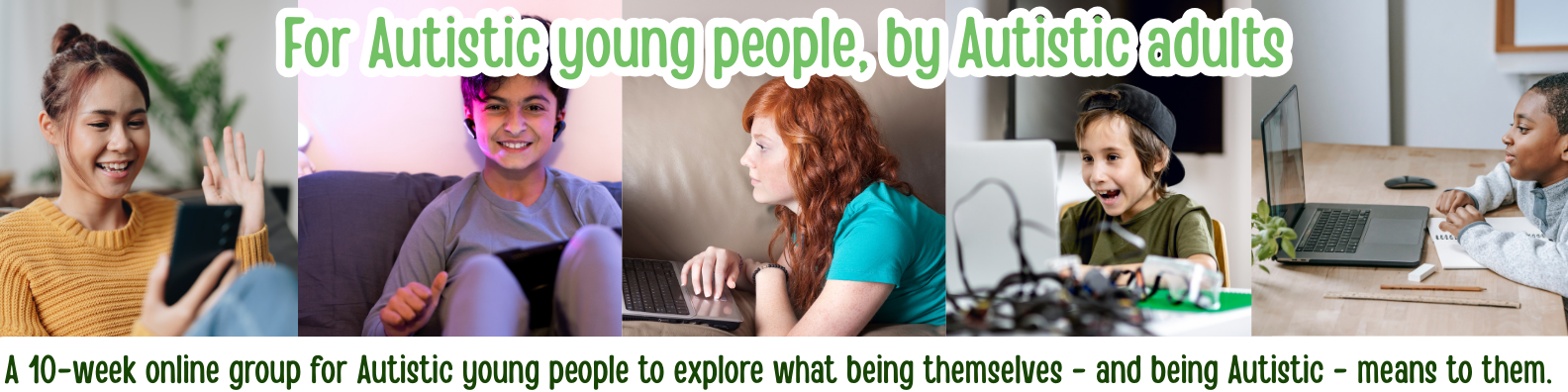
What is 'BEING ME'?
BEING ME: an online, neuro-affirming small-group space where Autistic children learn about themselves - together.
BEING ME is a 10-week online group experience for Autistic children and teenagers, facilitated by specialist Autistic Mentors and co-designed with our team of Young Leaders. It is only available with GROVE! Built upon the latest neuro-affirming research on Autistic experience, identity and wellbeing, BEING ME is a supportive online group that helps Autistic children understand autism and feel proud of who they are – all in a safe, supportive small group environment.
Children take part in gentle, semi-structured group sessions where they:
- learn what autism means for them
- explore their strengths and challenges
- understand things like sensory differences
- hear from and connect with other Autistic children and adults
- build self-understanding, confidence and a positive Autistic identity
Sessions are calm, respectful and low-demand.
Children can speak, type, draw, stim, listen, or simply be present whilst building peer connection as their authentic selves.
READY TO GO AHEAD WITH 'BEING ME'?
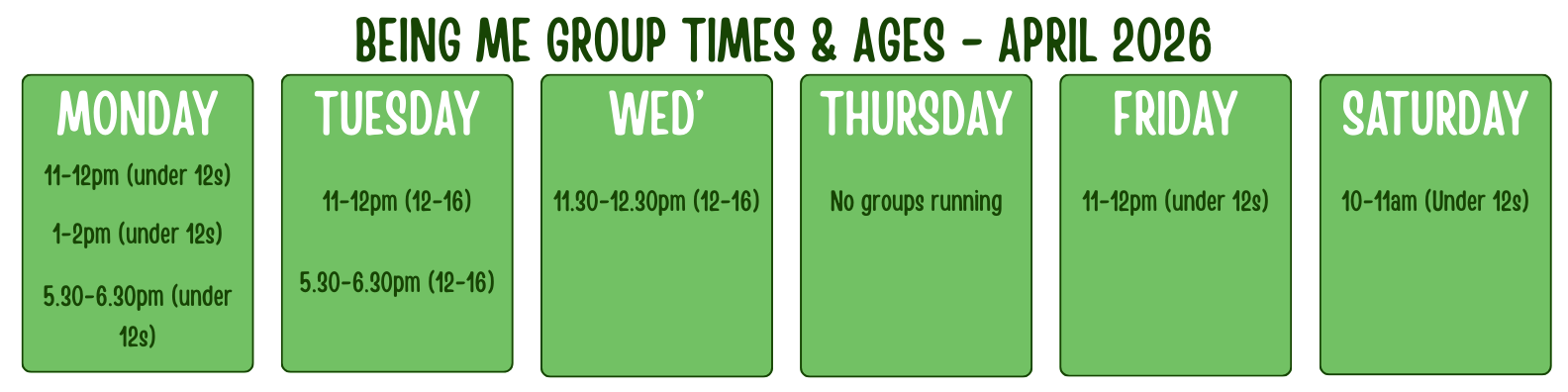
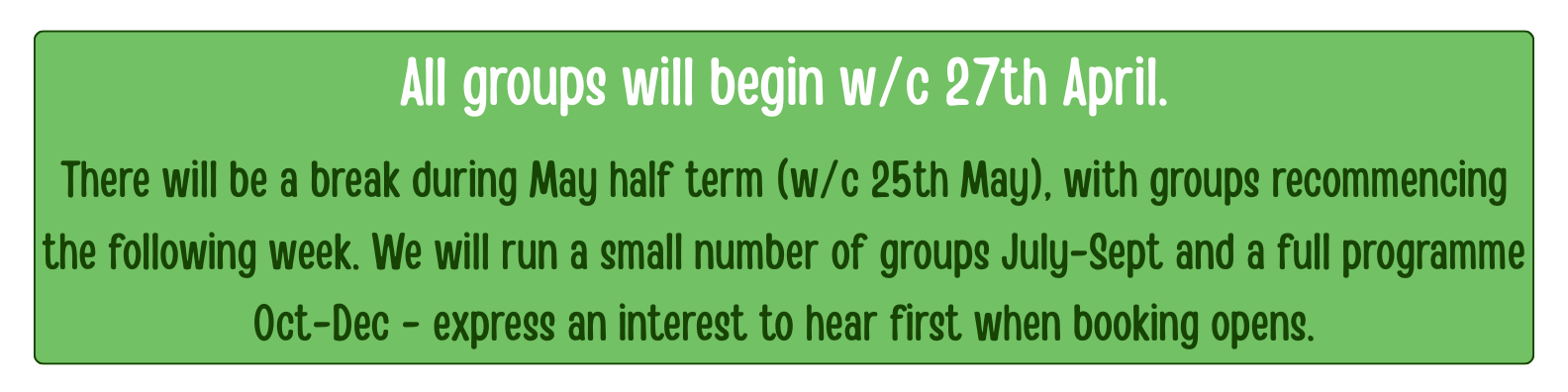
The link below will take you to the booking page for our next groups in April 2026 and a space to express an interest in the summer and autumn groups too.
“These are amazing, some of the best sessions plus I get to chat about stuff that interests me. It’s really helped me learn about myself.”
R aged 9
“I am so grateful to all at Grove for providing such a truly inclusive and safe space for neurodivergent young people. The relief my child feels being seen and heard by others is so healing for them. Thank you, you are doing incredible things.”
Mum to R
Supporting Autistic children's self-esteem, confidence and identity.
Understandably, discovering you’re Autistic brings up all kinds of thoughts and feelings – curiosity, relief, confusion, pride, uncertainty, worry, perhaps even unhappiness. BEING ME offers a safe, thoughtful space for your young person to explore all this – with peers who get it and Autistic Mentors who bring deep knowledge and lived experience. Together, we’ll explore what being Autistic – and being ourselves – means, feels like and can look like in everyday life. There’s no pressure to speak, no expectation to be social in a certain way – children can listen, type, talk, draw, stim, or simply be present. Young people can participate with their camera on or off, they can contribute or observe. Many children say this is the first time they’ve met others who are like them.
At the heart of the programme is a gentle but powerful process:
Getting to know ourselves.
Learning to value what makes us who we are.
And finding ways to be more fully ourselves – in ways that feel safe, feel right and feel possible.
Tailored Approach
BEING ME is a small, facilitated group, not an intervention designed to ‘fix’ and not a school-style course. It is a programme exclusive to GROVE, and one of the few spaces online where children and young people can learn about autism from specialist Autistic mentors, in a genuinely neuro-affirming way. Sessions are shaped around shared discussion, optional activities, and reflection, while being part of a group of Autistic peers.
BEING ME is tailored to the specific group we’re working with. This means we adapt both the content and the way sessions are delivered to suit the individuals taking part. This responsive, flexible approach is central to how GROVE works and allows us to make each session meaningful, relevant, and accessible, supporting everyone to engage in ways that feel right for them.
What We’ll Explore
Over the 10 weeks, with 4 – 8 young people and 1 or 2 Specialist Autistic Mentors, we’ll move through themes that support connection, insight and self-understanding:
-
Session 1: Getting to know each other – sharing joys, glimmers and interests
-
Session 2: Neurodiversity and intersecting identities
-
Session 3: What is ‘autism’? What does being Autistic mean to me and others?
-
Session 4: Communication, socialising and friendships
-
Session 5 & 6: Sensory experiences
-
Session 7 & 8: Looking after myself
-
Session 9: Self-advocacy
-
Session 10: Wrapping up and moving forward
Meet GROVE’s Autistic Mentors here!
Within these sessions we draw upon neuro-affirming research and community knowledge on areas such as: Monotropism, PDA, ADHD, co-occurring neurodivergence, sensory profiles, stimming, routines, energy accounting, spiky profiles, masking, meltdowns, shutdowns, burnout, alexithymia, the Double Empathy Problem, boundaries and consent.
As our approach is rooted in our Neuro-affirming Foundations, we take a value-neutral stance: recognising strengths, honouring challenges and supporting young people to make sense of their own experience, in their own way.
Each session includes a mix of discussion, creative or practical activities and reflection – shaped to the preferences and comfort of the group.
In addition to the 10 sessions, we include:
1. Young Person’s Activity Booklet – for those who would find written materials helpful beyond the sessions. We have two versions to choose from. The use of this booklet is not built into the sessions.
2. BEING ME Parent/Carer Programme Guide – a supportive companion resource with detailed information, further reading and context.
And as an optional extra:
We offer 1 hour parent/carer Q&A sessions at a variety of times/day as an optional extra*, helping you make sense of things alongside your young person. *These require seperate booking and payment.
BEING ME is a small-group experience where Autistic children learn about themselves alongside other Autistic children
Who BEING ME is for?
BEING ME is about connection, understanding and making space for Autistic young people to grow into themselves – with support, with insight and with community. It will benefit:
- Autistic children and teens who want to understand autism and themselves better
- Children who wonder – “why am I different?” or “is there something wrong with me?”
- Young people who benefit from gentle structure and shared experiences with no pressure to participate
- Children who may feel alone or misunderstood and/or have low self-esteem
- Parents/carers who believe in a neuro-affirming perspective
What it’s not for:
- Behavioural intervention (we do not support that approach)
- Social skills intervention – instead it is an authentic, comfortable space in which we celebrate Autistic social skills and learn how these may differ to neurotypical social skills
- Changing, fixing, overcoming (because that isn’t needed!)
BEING ME is not about changing Autistic children - it’s about understanding and belonging.
READY TO GO AHEAD WITH 'BEING ME'?
The link below will take you to the booking page for our next groups in April 2026 and a space to express an interest in the summer and autumn groups too.
BEING ME – Key Features:
How is BEING ME neuro-affirming?
BEING ME fully embraces the neurodiversity paradigm and rejects medical model or pathology-based frameworks. We also stand against “neurodiversity-lite.” The programme enables young people to explore and understand their Autistic identity on their own terms, giving access to affirming information without telling them what to believe.
Do participants need a formal autism diagnosis?
No – young people are welcome to join BEING ME whether or not they have a formal diagnosis. We fully support self-identification; participants just need to know they are or might be Autistic.
What age is BEING ME for?
BEING ME is designed for Autistic children, teens, and young people and we adapt the content and delivery style to suit different age groups. We create groups based on ‘expressions of interest’ generally grouping 8-12, 12-16, 16-18.
Who are the Mentors?
The Lead Mentor is Jess, GROVE’s Founder/Director who is Autistic ADHD and holds a Masters in Autism (distinction). All GROVE’s Mentors are Autistic and therefore bring lived experience. The team includes Mentors with PGCerts, BAs, MAs, PhDs in autism as well as people who speak, write and train on autism internationally.
How does communication work?
BEING ME accommodates all forms of communication. We work closely with participants and their families to ensure needs are met in a supportive and affirming way.
Can cameras be turned off during sessions?
Yes – once identity is verified ahead of the programme, participants are welcome to keep their cameras off. This helps create a comfortable, low-pressure environment for everyone.
My child won’t talk or do activities – is that ok? And I don’t think they will sit for an hour!
Absolutely fine! Young people are welcome to observe, do their own thing and participate in any way that feels comfortable for them. We won’t sit still for an hour either, your young person will see their Mentors stimming and fidgeting and we’ll validate that need to do what our bodies and minds need to be comfortable.
What kind of activities do you do?
We have a range of different things that we select from depending on the group – this might include more active ‘get up and move around’ activities, games, discussion prompts (with flexibilty in communication style built in), polls, crafts and so on. This is something that is really unique about BEING ME – we spend time outside of sessions every week planning for your child and their group. If we have their consent to build in interests this is often possible too but we will never use their interest to try and get them to engage.
How does BEING ME support PDA young people?
We take a low-demand, invitational approach in all sessions. Content and activities are adapted for flexibility, giving young people genuine autonomy and agency in their choice to engage in ways that feel safe and comfortable. We focus on support rather than pressure, helping young people feel included without creating anxiety or resistance. When we have PDA young people in the group we adapt content to cover PDA experience as well.
How many young people are in a group?
Between 4 – 8, with 1 or 2 Autistic Mentors – BEING ME with GROVE is a shared, small group experience and that’s one of the things that makes it so impactful and unique.
What if we miss a session or my child can no longer attend?
We get it – that’s why you will have access to recordings of the sessions for the duration of the programme so your young person can catch up if they want to. As this is a programme that is adapted as we go through, we encourage you to communicate with us if your child is struggling so we can work together to support.
Can parents join or be with their child during sessions?
Yes – parents and carers are welcome to be present alongside their child if it helps them feel safe and supported.
Do you have any resources to help my child understand what BEING ME is about?
Yes! You can access a written document and video here.
Is the BEING ME trauma-informed?
Yes – we use a low-demand, trauma-informed approach that helps young people feel safe and comfortable. Our practice is anti-behaviourist, prioritising wellbeing over behaviour management. We ask for detailed information about your child and their experiences before we begin so we can work hard not to trigger and re-traumatise.
What safety measures are in place?
All GROVE Mentors undergo a Safer Recruitment process, including Enhanced DBS checks with children’s barred list clearance and are safeguarding trained with internal and external safeguarding oversight.
Can young people from outside the UK join?
Yes – BEING ME is fully online, so international participants are welcome.
How is BEING ME different to GROVE interest-based groups?
Autistic children join BEING ME to understand autism and build confidence in who they are, many then enjoy GROVE interest-based groups as ongoing, fun social spaces to connect around shared interests. We also find many young people benefit from individual mentoring after BEING ME in order to continue to deepen their understanding and benefit from ongoing, personalised support.
All our supportive approaches complement each other beautifully:
BEING ME → identity & understanding
INTEREST-BASED GROUPS → ongoing peer connection
MENTORING → ongoing, 121, deeply personalised support
Can my child do BEING ME at school?
BEING ME is a programme that is exclusive to GROVE – no one else can deliver it. But yes, young people can access online from school if they have a private space and computer. We have had a lot of success with schools and Local Authorities seeing the value in BEING ME and funding this through the child’s EHCP (you can reach out to us for a personalised letter of recommendation if you’d like to explore this yourself).
What does BEING ME cost?
-
Full price, funded: £500 per place if funded via an EHCP, personal budget, school, LA, or any other professional body.
-
Self-funding discount: Parents and carers are offered a 25% discount if this is needed, making the cost £375.
Flexible payment is available, allowing the total cost to be spread over 2 to 4 months, with the full balance due in the month the programme begins. View full T&Cs.
*Prices and discounts remain subject to review. This programme cost does not include optional parent/carer Q&A sessions. Payment must be made in UK £.
How do we book?
Booking for April 2026 is open here. If you are interested in hearing about our summer and autumn groups first, please complete an expression of interest.
GROVE's online sessions accessible across the UK and worldwide.
Your young person deserves to begin exploring what it means to truly know, value and be themselves.
“Brilliant. Both Jess and Scott are so engaging, open, friendly and inclusive. Your ability to meet the needs of everyone in the group, create a truly safe, inclusive and affirming space is so valuable. My young person really appreciated hearing your own experiences too.” Parent
“It was honestly brilliant, each week flowed naturally and all activities were valuable.” Parent
BOOK 'BEING ME' HERE
The link below will take you to the booking page for our next groups in April 2026 and a space to express an interest in the summer and autumn groups too.
“The fact that he could participate through text without video / voice and still feel seen and heard was incredibly valuable. Everyone’s special interests were included and remembered. Thank you.” Parent
“Both Jess and Scott have a lovely manner with young people, they are truly respectful and able to share their knowledge in a young person friendly way. They were both so welcoming! They were flexible in the delivery of the information and were able to attune to the specific group of young people attending the programme which was so valuable.” Parent
Neuro-affirming autism understanding for children and young people.
“It’s such a valuable course for young people and truly affirming and inclusive as well as being informative and fun, definitely book on!” Parent
WOULD YOUR YOUNG PERSON PREFER 'BEING ME' 121 WITH AN AUTISTIC MENTOR?
“The parent booklet was amazing, very thorough and informative and has allowed me to consolidate knowledge. This will help embed the key information points with my young person going forward.” Parent
“I really appreciated the video replays as we couldn’t make 1 week so we could catch up.” Parent
COMING SOON: BEING ME 121
Be the first to know when our Specialist Mentors are ready to offer BEING ME 121.
“The material provided went above and beyond to give us all the information we would need to support our young people in their engagement. It was clearly very well thought out.” Parent
“Honestly his willing participation is HUGE. I very much was not sure if he’d sit for the group, so the fact that he’s staying engaged is pretty amazing. I credit it to the way you are incorporating all of the young people’s interests so beautifully and making it clear that they can
participate how and if they want to. I appreciate you!” Parent
“The key aspect was the flexibility within the structure – so being able to catch up with the video replays, being able to eat during the sessions, or move around. It was ok to leave before the end if needed as well. This felt really different and also accommodating.” Parent
“The interactive aspects of the course exceeded my expectations (along with no pressure to participate if the young person didn’t want to). It was truly child focused – which a lot of people try to be, but Grove actually is.” Parent
Funding BEING ME
BEING ME can be funded at the full price of £500 per programme via an EHCP, short breaks, personal health budgets, DLA or any other professional / funded means.
Parents/carers can also self-fund for which we are able to offer a discount if this is needed (this varies). We also maintain a waiting list for a limited number of ‘Pay What You Can’ spaces – we cannot guaratee availabilty and will only reach out if a space becomes available and this is likely to be within the week before the programme starts. To join that waiting list please complete the form below and we will be in touch if we are able to offer a space.
“It was honestly brilliant, each week flowed naturally and all activities were valuable.” Parent
Information for Professionals & Schools
Supporting Autistic children through identity-affirming group learning, BEING ME is an online, small-group experience designed to support Autistic children’s self-understanding, emotional wellbeing and sense of identity. The group programme is designed and led by Specialist Autistic Mentors with post graducate qualifications, delivered by a qualified teacher with a Masters in Autism (distinction) and is fully safegurding compliant.
BEING ME is suitable for referral by:
- Schools
- SENCOs
- Educational Psychologists
- CAMHS
- Occupational Therapists
- Local Authorities
- NHS
- Social Services
- Speech and Language Therapists
- Autism assessment providers
- Clinical Psychologists
- All other support services
What BEING ME supports:
BEING ME helps Autistic children:
- understand their diagnosis or identity
- develop self-awareness
- reduce shame and confusion
- build positive autistic identity
- feel less isolated
- improve emotional regulation through understanding
This often supports educational engagement and wellbeing, particularly for children experiencing anxiety, those who are unable to attend school and those who have low self-esteem.
What BEING ME is (and isn’t):
BEING ME is:
- psychoeducational
- identity-affirming
- neuro-affirming
- Autistic-led
- group-based (although we will also be introducing BEING ME 121 in 2026)
- low-demand
BEING ME is not:
- behavioural intervention
- social skills training
- therapy
- a compliance-based programme
BEING ME aligns well with neuro-affirming practice, the SEND Code of Practice, and strengths-based approaches.
Why group-based learning matters:
Learning about autism alongside other Autistic children and adults:
- reduces isolation
- normalises difference
- offers real time peer validation
- allows shared meaning-making
- improves long-term self-esteem
Children are not learning about autism in isolation – they are learning who they are, together.
Outcomes professionals may observe:
Professionals and schools may find Autistic children and teens who attend BEING ME:
- show improved self-advocacy
- have better language to explain needs
- feel more confident accepting support and accommodations at school
- show reduced internalised stigma
- engage more positively with support
Referral and collaboration:
BEING ME can:
- complement school-based support
- sit alongside therapeutic input
- support transitions or post-diagnosis adjustment
- be included in EHCP support planning (where appropriate)
We are happy to:
- provide information related to EHCP targets
- liaise with schools or professionals (with consent)
- discuss suitability for individual children
Please email Jess, GROVE’s Founder/Director on jess@gr0ve.org to discuss further.
“Brilliant. Both Jess and Scott are so engaging, open, friendly and inclusive. Your ability to meet the needs of everyone in the group, create a truly safe, inclusive and affirming space is so valuable. My young person really appreciated hearing your own experiences too.” Parent
BEING ME HELPS AUTISTIC YOUNG PEOPLE AGE 8-18 WITH:
Connection to other Autistic people with similar lived experience
Validation, acceptance, belonging
Accurate, affirming information about autism
A safe environment to explore their emerging identity
A chance for to overcome feelings of self-stigma & shame
The most up to date affirming autism research
Knowledge to advocate for needs
Self-understanding, self-compassion, self-confidence
An opportunity to ask questions of Autistic adults & Autistic peers
WHAT DOES RESEARCH TELL US?
GROVE does not support the use of pathologising language & framing of autism in some of the following academic work however this does not mean we have nothing to learn from the research itself:
“The report needs to foster a positive Autistic identity… The report also needs to signpost a young person and their family to how they can connect with the Autistic community…” (Hartman, O’Donnell-Killen, Doyle, Kavanagh, & Day, 2025, p. 281)
“First and foremost, we recommend that the young person connect with their Autistic peers. The importance of building a community with people who share similar neurological experiences can’t be overstated… They will gain from being around like-minded peers who accept them, which, in turn, will help them to learn to accept themselves.” (Hartman, O’Donnell-Killen, Doyle, Kavanagh, & Day, 2025, p. 285)
Studies have shown that learning about autism has been associated with “improved self-advocacy skills (60%), enhanced self-awareness of personal strengths (69%)” and indeed that when young people sought that information from other Autistic people there were better outcomes regarding self-esteem (Keily et al., 2020).
Particularly for young people the notion of ‘identity’ and ‘being Autistic’ has important connections thus “post-diagnostic support for young people and families to include opportunities to reflect on the diagnosis with others and exploration of the best ways to talk about autism is also recommended” (Mesa & Hamilton, 2022).
Cooper et al. (2023) state: “Moreover, developing a sense of pride in their autism identity may be more challenging in youth than for adults who may be in environments where they are less likely to face daily harassment and stigmatisation. Our research indicates that having a positive sense of one’s autism identity in adolescence and young adulthood is still associated with better mental health, despite the additional challenges that autistic young people face in making sense of their identities… Promoting a balanced sense of autism identity, including positive elements as well as acknowledging challenges, will be supportive of well-being in autistic young people.”
Cooper et al. (2021): “Our findings provide evidence that developing a balanced view of autism, with emphasis on strengths associated with autism can have a positive effect for the collective self-esteem to the extent that the individual has a sense of affiliation with other autistic people. While this may happen ‘naturally’ for individuals over time, efforts by educational settings and support services may not only speed this process up, but also reduce the length of time spent living with a solely negative view of the condition. This may be particularly pertinent for early intervention with younger people post-diagnosis and our findings are highly supportive of endeavours … developing a more comprehensive and balanced view of the autism diagnosis.”
REFERENCES:
- Cooper, R., Cooper, K., Russell, A.J. et al (2021). “I’m Proud to be a Little Bit Different”: The Effects of Autistic Individuals’ Perceptions of Autism and Autism Social Identity on Their Collective Self-esteem. J Autism Dev Disord 51, 704–714. https://doi-org.hallam.idm.oclc.org/10.1007/s10803-020-04575-4
- Cooper, K., Russell, A. J., Lei, J., & Smith, L. G. (2023). The impact of a positive autism identity and autistic community solidarity on social anxiety and mental health in autistic young people. Autism, 27(3), 848–857. https://doi-org.hallam.idm.oclc.org/10.1177/13623613221118351
-
Hartman, D., O’Donnell-Killen, T., Doyle, J. K., Kavanagh, M., & Day, A. (2025). The neurodiversity affirmative child autism assessment handbook. Jessica Kingsley Publishers.
- Kiely, Bridget; Adesman, Andrew; Rapoport, Eli; Gutman, Alyson. (2020) Patterns and Outcomes of Diagnosis Disclosure to Youth with Autism Spectrum Disorder. Journal of Developmental & Behavioral Pediatrics 41(6):p 443-451. https://doi.org/10.1097/DBP.0000000000000802
- Mesa, S., & Hamilton, L. G. (2022). “We are different, that’s a fact, but they treat us like we’re different-er”: understandings of autism and adolescent identity development. Advances in Autism, 8(3), 217-231. https://doi.org/10.1108/AIA-12-2020-0071
Frequently Asked Questions:
WILL YOUR APPROACH BE JUST ABOUT STRENGHTS & POSITIVES?
That depends – if your child is not ready to face some of the reality of myths & stigma surrounding autism then yes, we can plan a bespoke approach through individual mentoring that could approach their initial exploration solely in this way. If we have a group of similar children / young people then we may be able to group individuals with that vision in mind too.
But ideally our preference is a truthful, value-neutral approach to autism where we explore strengths & are honest about challenges.
CAN MY CHILD PARTICIPATE WITH THEIR CAMERA OFF?
Yes! We have guidelines for safety to verify who is in attendance but we are very happy working with our mentees off camera.
WILL THIS PROGRAMME BE AVAILABLE TO CHILDREN & YOUNG PEOPLE OUTSIDE THE UK?
Yes! We are able to welcome young people for whom an English speaking programme is suitable to attend from the following places: USA, Canada, Ireland, EU, New Zealand, Australia.
WHY DOES BEING ME COST MORE THAN A BOOK OR ON-DEMAND RESOURCE?
BEING ME is much more than reading material – it’s a fully-supported programme. Participants receive:
-
10 hours of live online mentoring, led by Autistic Mentors with lived experience and specialist training
-
Tailored support: Mentors spend hours outside of sessions adapting content and communicating with parents/carers so each participant’s needs are met as far as we are able
-
Additional resources: Our exclusive activity and parent/carer booklets
-
Expertly-developed content: The programme reflects extensive research, reflection, and development by the GROVE team
-
Social and identity-focused outcomes: improving self-understanding, self-acceptance, and confidence
All of this represents a level of personalisation and professional specilism. The investment ensures your young person receives high-quality, neuro-affirming support that meets their unique needs.
CAN I PAY IN INSTALMENTS?
We offer flexible instalment options to make it manageable for self-funding parents/carers. You can choose to pay in 2, 3, or 4 instalments, depending on the time available before your programme starts.
- For 4 instalments, payments would be £93.75 each.
- For 3 instalments, payments would be £125 each.
- For 2 instalments, payments would be £187.50 each.
Invoices are issued on the 1st of each month, and payment is due within 3 days. The final instalment must be paid at the beginning of the month in which the programme starts, with cleared funds received at least 48 hours before the programme begins.
WILL YOU ACCOMMODATE ALL FORMS OF COMMUNICATION? MY CHILD IS NON-SPEAKING.
Yes, absolutely! We will discuss with you how we can support your child to access our services.
DO YOU HAVE A PROGRAMME THAT WOULD WORK IN SCHOOLS?
Yes, BEING ME can be delivered to individual students in school by GROVE – they just need a private space and a computer. Please contact us to discuss the option of a bespoke group just for your school.
WILL THERE BE WAYS FOR A NON-AUTISTIC CHILD TO LEARN ABOUT AUTISM? MY CHILD'S SIBLING WOULD REALLY BENEFIT FROM THAT!
Yes, we are working on that. Please sign up to our newsletter & then you’ll be notified when we launch this option.
MY CHILD CANNOT JOIN GROUPS - CAN THEY DO BEING ME ON THEIR OWN?
Yes, we are working on that. Please sign up to our newsletter & then you’ll be notified when we launch this option.